
Epsom Derby Betting Markets and Ante-Post Odds
 Available in US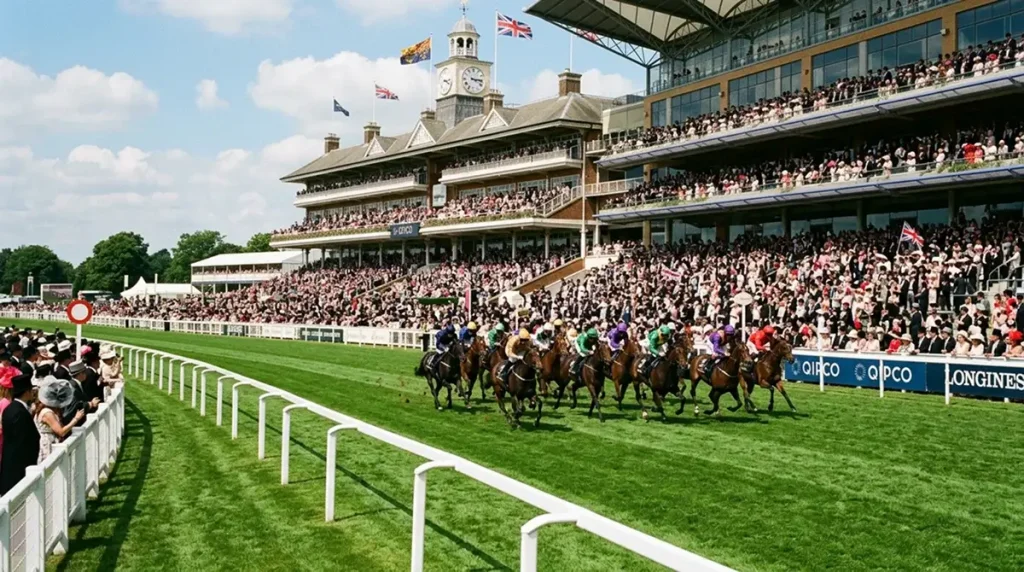
The first Derby I watched seriously was in 2017. I had backed a well-fancied colt based purely on trial form, and I watched it struggle to handle Tattenham Corner, lose its position on the camber, and finish nowhere. The horse that won had a completely different profile — balanced, athletic, comfortable on the slopes. That was when I understood that the Derby is not just a mile-and-a-half race. It is an examination of a young horse’s ability to handle a track that is unlike anything else in world racing.
Epsom is the race that defines a generation of three-year-olds. Win the Derby and you are a stallion worth millions. Fail to handle the track and a brilliant career can stall before it starts. For bettors, the challenge is that standard flat form — times, ratings, finishing margins on flat, galloping tracks — only partially translates to Epsom’s unique demands.
Track Topography and Course Form Impact
Epsom Downs is built on a hillside, and the track reflects it. The first half mile climbs steadily, the field then crests the hill and descends sharply through a left-hand bend at Tattenham Corner, before straightening for the final three and a half furlongs on a course that slopes left to right. No other racecourse in the UK tests a horse’s balance, agility, and temperament in quite the same way.
The downhill run to Tattenham Corner is where Derbies are won and lost. Horses galloping at 35 miles per hour on a steep, curving descent need to maintain their balance while jockeying for position in a field of 12 to 16 three-year-olds, many of whom have never raced on such a course before. A horse that leans into the camber naturally — one that is comfortable being slightly off-balance — handles the turn without losing momentum. A horse that fights the gradient, tries to correct its balance, or panics at the unfamiliar sensation loses lengths that are almost impossible to recover in the straight.
The number of high-quality flat horses rated 90 or above reached 1,423 in 2025. Many of those top-rated horses have the talent to win a Derby on paper but lack the physical attributes to handle Epsom. This is why the Derby regularly produces results that confound the formbook — a horse rated 115 on a conventional galloping track might be beaten by one rated 108 that simply handles the idiosyncrasies of Epsom better.
Course form is the strongest predictor. Horses that have raced at Epsom before — even in a minor conditions race or a handicap trial — hold a significant edge over those encountering the track for the first time. The Derby trials staged at Epsom itself, rather than at Newbury or York, carry extra weighting in my analysis for precisely this reason.
Key Trials and How They Predict Derby Performance
The Derby trial season runs from late April through late May, and not all trials are equal in their predictive power.
The Dante Stakes at York is historically the most reliable indicator. Run over ten and a half furlongs at a fair, galloping course, the Dante tests speed, stamina, and class in a small field of well-bred colts. Dante winners have an outstanding record at Epsom, and even Dante runners-up frequently go on to perform at Epsom. The catch is that York is a flat, right-handed track with no gradient — it does not replicate Epsom’s specific demands, so a Dante winner still needs the physical attributes to handle the slopes.
The Lingfield Derby Trial, run at Lingfield’s left-handed polytrack, offers some simulation of the Epsom downhill turn because Lingfield has its own descending bend. Performance in the Lingfield trial is a useful guide to how a horse might cope with the Tattenham Corner experience, though the artificial surface means the going comparison is irrelevant.
The Chester Vase, run at Chester’s tight, left-handed circuit, tests a different quality: the ability to race on a sharp, turning track. Chester’s tight bends do not replicate Epsom’s gradient, but they do test a horse’s balance and willingness to race close to the rail under pressure. Horses that handle Chester comfortably tend to have the agility that Epsom rewards.
French and Irish trials — the Prix Greffulhe, the Derrinstown Stud Derby Trial — produce regular Epsom winners but require careful form comparison because the racing conditions differ significantly. The Curragh is flat and right-handed; Longchamp has undulations but nothing approaching Epsom’s camber. I treat these trials as evidence of ability and class, but I discount them as evidence of track suitability.
Historical Favourite Strike Rates and Market Patterns
Over the past 20 years, the Derby favourite has won roughly 40% of the time. That sounds respectable until you consider the prices: Derby favourites typically trade between 5/4 and 7/2, meaning you need a strike rate well above 40% to profit from backing them blindly. The maths does not work.
Where the market does create value is in the 8/1 to 20/1 range. Horses at these prices have enough form to justify their place in the field but are discounted because of perceived stamina doubts, ground concerns, or lack of trial form at the highest level. Over the same 20-year period, each-way bets on horses priced between 8/1 and 20/1 have produced a positive return to level stakes — not dramatically so, but consistently enough to suggest the market systematically underprices the middle of the field.
Total British prize money reached 153 million pounds over nine months of 2025, and the Derby’s purse is among the richest single races in the calendar. That prize level guarantees strong fields, which in turn guarantees competitive betting markets where the difference between third and eighth can be a neck and a change of luck in running.
One pattern I have tracked: the draw. Epsom’s straight is wide enough that the draw should not matter, but in practice, horses drawn low (near the inside rail) have a slight advantage in smaller fields because they can save ground on the rail through Tattenham Corner. In larger fields, the middle to high draws allow jockeys to avoid traffic problems and get a clear run down the hill. I always note the draw and factor it into my assessment of each horse’s likely running position through the crucial stages of the race. For another Classic-level flat meeting where track demands shape the market differently, Royal Ascot’s round course provides a useful point of comparison.
How does Epsom"s unique track layout affect betting strategy?
The downhill run to Tattenham Corner, the left-hand camber, and the undulating straight mean that raw ability is not enough at Epsom — a horse must also handle the physical demands of the course. This makes course form and trial form from Epsom itself more predictive than overall ratings. Horses rated lower on conventional tracks but proven at Epsom can outperform higher-rated rivals who have never encountered the gradients.
Which trial races are the most reliable indicators for the Derby?
The Dante Stakes at York has the strongest historical correlation with Derby performance. The Lingfield Derby Trial offers some track simulation due to its descending bend. The Chester Vase tests agility on a tight track. No single trial perfectly replicates Epsom, so combining evidence from multiple sources — and noting whether the horse has actually raced at Epsom — gives the most reliable picture.
Articles
Written by the editors at Betting Online Horse Racing.
