
Horse Racing Affordability Checks and £150 Limits
 Available in US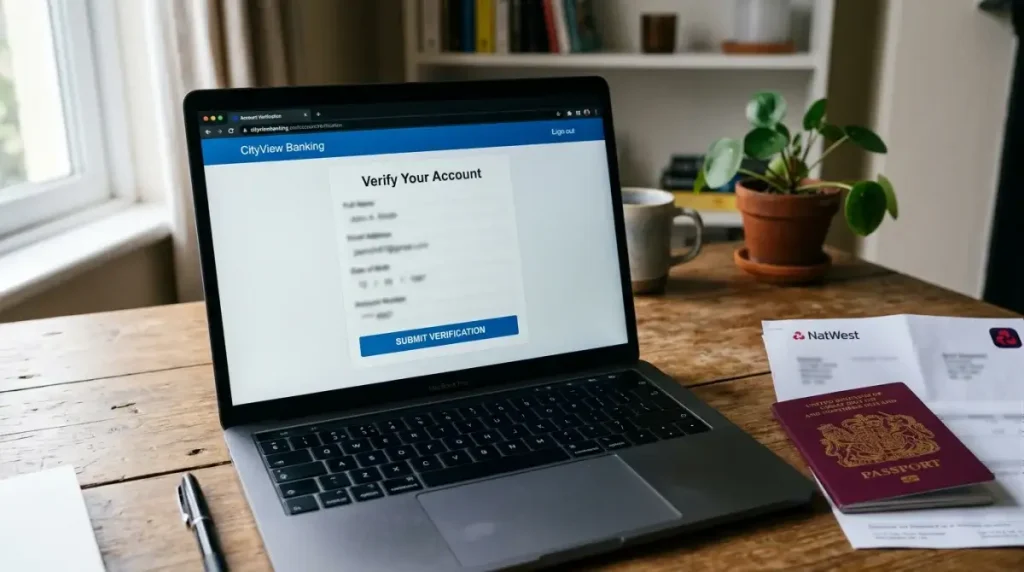
A friend of mine — a moderately successful punter who had been betting on racing for 20 years — had his account frozen mid-Cheltenham in 2025. Not because he was losing. Not because he was flagged for problem gambling. Because his net monthly deposits crossed a threshold and his operator could not verify his income fast enough to unfreeze him. He missed the Gold Cup, watched the race from the stands without a penny on, and told me afterwards he understood why people were moving to unlicensed sites. I did not agree with his solution, but I understood his frustration.
Affordability checks have become the most divisive issue in UK racing and betting. Since February 2025, the UKGC lowered the net deposit threshold that triggers enhanced checks from 500 pounds to 150 pounds per month. That number — 150 pounds — is not a lot of money for a regular racing bettor. It is roughly five bets at 30 pounds each, or a single serious each-way wager on a Saturday feature. For punters who bet within their means but bet frequently, this threshold has fundamentally changed the experience.
Trigger Mechanics for Betting Account Checks
The mechanics are straightforward on paper but messy in practice. Every licensed UK operator must monitor their customers’ net deposits — the total amount deposited minus the total amount withdrawn — over rolling periods. When your net deposits hit 150 pounds within a calendar month, the operator is required to carry out an affordability assessment.
At the basic level, this means the operator runs automated checks against publicly available data: credit reference files, electoral roll information, and income estimation models. These light-touch checks happen without your knowledge and usually without disrupting your betting. The operator is looking for obvious mismatches — a pattern of heavy deposits from someone whose estimated income does not support that level of spending.
If the automated check flags a concern, the process escalates. The operator contacts you directly and asks for documentary evidence of your income. This is where things become intrusive. You might be asked to provide payslips, bank statements, tax returns, or proof of savings. A YouGov survey commissioned by the Betting and Gaming Council found that 65% of UK bettors are unwilling to hand over this kind of financial documentation to continue gambling. That reluctance is not irrational — these are sensitive personal documents being submitted to a commercial company.
The timeline for processing varies wildly. Some operators complete the review within 24 hours. Others take days or weeks, during which your account may be restricted or frozen. I have spoken to punters who had their accounts locked for three weeks mid-season while waiting for a document review that ultimately cleared them without issue. The disruption is real, and it tends to hit hardest during the busiest weeks of the racing calendar, when deposit activity naturally spikes.
Punter Response: Survey Data and Behavioural Shifts
The Racing Post runs an annual Big Punting Survey, and the 2025 edition — based on roughly 10,000 responses — painted a stark picture. Nearly a quarter of respondents, 23.7%, reported being subjected to affordability checks, up from 16.6% two years earlier. More telling was the behavioural response: a third of high-value bettors admitted to using unlicensed operators where no such checks exist.
That migration is not hypothetical. It is happening in real time, and the data supports it. Richard Wayman, the BHA’s Director of Racing, has been blunt about the cause: the decline in betting turnover is headed by the impact of affordability checks, which have pushed people to either stop betting entirely or place their money with unlicensed operators where such checks do not apply. When the most senior racing official in the country draws a direct line between regulation and market leakage, the scale of the issue becomes difficult to dismiss.
The behavioural pattern follows a predictable arc. First, a punter hits the threshold and faces their initial check. If the light-touch automated review passes, they continue with mild annoyance. If the review escalates to document requests, one of three things happens: they comply (roughly a third), they reduce their betting to stay below the threshold (another third), or they move some or all of their activity to unregulated platforms (the remaining third). Each of those outcomes reduces legal betting turnover — and by extension, the revenue that funds British racing through the levy system.
The Cost to British Racing: Turnover, Levy, and Prize Money
The financial link between affordability checks and racing’s health is arithmetic, not speculation. Betting turnover on horse racing fell 12.8% over two years to Q3 2025. That decline translates directly into lower levy contributions, lower operator spending on racing media rights, and ultimately lower prize money — which in turn reduces field sizes, race quality, and the attractiveness of the sport to both existing and new punters.
The Jockey Club has put a number on it: 250 million pounds in potential losses to British racing over five years if the current affordability framework remains unchanged. That figure accounts for reduced turnover, reduced levy income, reduced sponsorship, and the knock-on effects of smaller fields and lower-quality racing.
The BHA described the regulatory approach as an unprecedented state intrusion that has dismayed millions of people who love horse racing. That language — from an official submission, not a campaign soundbite — reflects the depth of concern within the sport’s governing body. The argument is not that affordability checks are unnecessary in principle. Everyone in the industry agrees that protecting vulnerable gamblers is important. The argument is that the 150-pound threshold catches a vast number of recreational bettors who are not vulnerable, and the friction created by the process drives them toward unregulated alternatives that offer no consumer protection at all.
The total betting turnover on horse racing dropped by roughly 3 billion pounds in real terms since 2022. That is money that would have circulated through the licensed ecosystem — generating levy, funding prize money, supporting the 85,000 jobs that depend on the racing industry. Instead, a growing portion of it is flowing to operators who pay no tax, contribute nothing to the levy, and have no interest in responsible gambling. For a detailed look at where that migration is heading, the data on unlicensed operator growth puts the scale of the problem into perspective.
What documents do bookmakers request during an affordability check?
The most commonly requested documents include recent payslips, bank statements showing income, tax returns or self-assessment records, and proof of savings or investments. The specific requirements vary by operator and by the level of concern flagged by their automated checks. Some operators accept a single payslip; others request three months of bank statements. The process is not standardised across the industry.
Can affordability checks be appealed or challenged?
There is no formal industry-wide appeals process for affordability checks. If you disagree with an operator"s decision, your recourse is to contact their customer service team or escalate to their complaints procedure. If the complaint is unresolved, you can refer it to the relevant alternative dispute resolution provider. However, the operator is legally required to conduct the check, so the scope for challenge is limited to how the check was conducted, not whether it should have been triggered.
Articles
Written by the editors at Betting Online Horse Racing.
