
Horse Racing Free Bets and Welcome Offers
 Available in US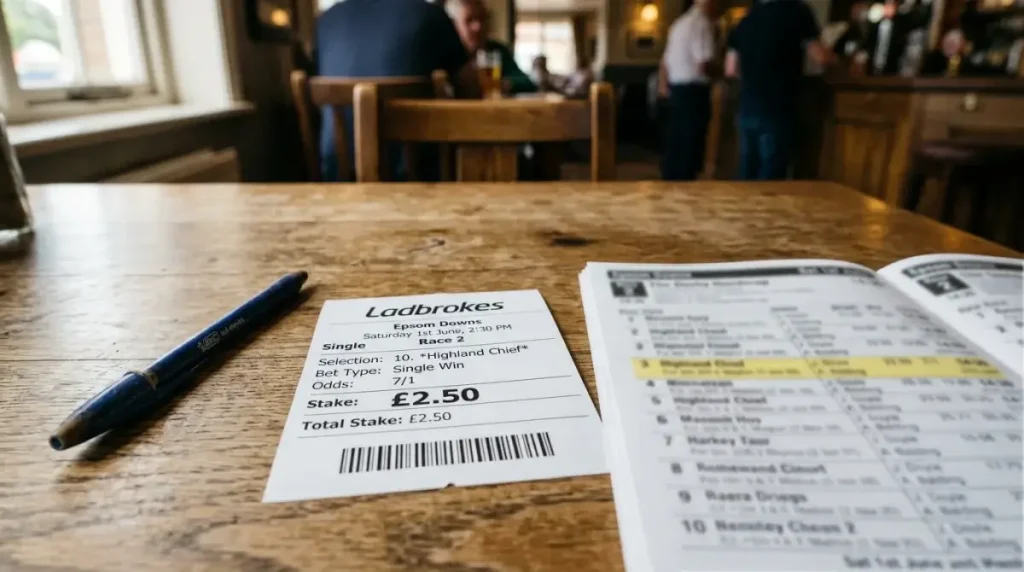
My first free bet was a ten-pound sign-up offer in 2017. I stuck it on a 6/1 shot at Kempton, the horse won, and I collected 60 pounds. I thought I had found free money. It took me another three months and four more sign-up offers to realise that the “free” part comes with enough small print to fill a racecard. Free bets are a tool, not a gift — and treating them as anything else costs you real money.
The UK horse and sports betting market sits at 3.7 billion pounds in 2026, with 499 operators competing for your account. That competition drives increasingly creative welcome offers, but creative is not the same as generous. Every free bet has conditions that shape its actual value, and most punters never read past the headline number. This guide breaks down the offer types, decodes the terms that matter, and shows you how to figure out which ones genuinely work on horse racing markets.
Horse Racing Bonus Types and Structures
When I started collecting welcome offers, I assumed a free bet was a free bet. Thirty-odd sign-ups later, I can tell you there are at least four distinct structures, and each one behaves differently when you try to use it on racing.
The most common is the bet-and-get model. You open an account, place a qualifying bet with your own money — typically at minimum odds of 1/2 or higher — and the operator credits your account with a free bet token of equal or fixed value. The qualifying bet is real: if it loses, your money is gone. The free bet is your consolation or your bonus, depending on how you look at it.
Then there is the deposit-match, where the operator matches your first deposit up to a ceiling — say 50 pounds — with bonus funds. These funds usually come with wagering requirements: you might need to turn over the bonus amount five, six, or ten times before you can withdraw anything. On horse racing, where average odds run higher than football markets, the turnover can accumulate faster, but the variance also increases.
Risk-free first bet offers refund your stake as a free bet if your opening wager loses. The refund is not cash — it is a free bet token with the same restrictions as any other. The appeal is psychological: you feel protected on your first punt. The reality is that you are receiving a free bet conditional on losing your own money first.
Finally, some operators offer no-deposit bonuses — a small free bet credited just for registering, before you fund your account at all. These are rare in 2026 and typically capped at five pounds or less, but they carry the lowest barrier to entry. The catch is usually a high wagering requirement before any winnings become withdrawable.
Reading the Small Print: Wagering, Expiry, and Stake-Not-Returned
A punter I know collected a 40-pound free bet, placed it on a 3/1 winner, and expected 160 pounds in his account. He got 120. The missing 40 was the stake — because free bet tokens return profit only, not the stake itself. He felt cheated; the terms said it clearly. He just had not read them.
Stake-not-returned is the single most important term in any free bet offer. When you use a free bet token and it wins, you receive the profit but not the face value of the token. A 20-pound free bet on a 5/1 winner pays 100 pounds, not 120. This effectively reduces the true value of the free bet by the probability-weighted stake amount. On average, a stake-not-returned free bet is worth roughly 70 to 80 percent of a cash bet of the same size, depending on the odds you use it at.
Wagering requirements compound the reduction. If your bonus funds carry a 5x turnover requirement, you need to bet 250 pounds before withdrawing any winnings from a 50-pound bonus. At typical bookmaker margins, you will lose a portion of that turnover to the house edge. The effective value of the bonus shrinks with every multiplier increment.
Expiry windows are the silent killer. Most free bets expire within seven days of being credited. Some give you 30 days; a few offer just 72 hours. If you do not use the token within the window, it disappears. I have lost free bets to expiry because I forgot about them during a quiet midweek spell with no appealing races. Setting a calendar reminder on the credit date is a habit worth adopting.
Minimum odds requirements on the qualifying bet and on the free bet itself differ from operator to operator. A qualifying bet might need to be at 1/2 or longer, while the free bet token might be restricted to selections at evens or longer. This matters for horse racing, where short-priced favourites in small fields regularly go off below evens. If your preferred betting style revolves around favourites, some free bet structures become unusable. Grainne Hurst of the Betting and Gaming Council put it well when she noted that the overwhelming majority of customers bet safely and within their means — the point being that regulatory and promotional frameworks should serve those customers, not frustrate them with opaque terms.
Online GGY across the remote betting sector grew 8% year on year to 1.42 billion pounds in mid-2025, which tells you that operators have healthy margins to fund promotions. But healthy margins for the operator do not automatically mean good value for the punter — it means there is enough room in the numbers for the terms to work in the house’s favour even after giving something away.
Which Offers Actually Work on Horse Racing Markets
Not every free bet is created equal for racing. I have signed up to offers that looked excellent on paper and turned out to be football-only, or restricted to accumulators, or limited to in-play markets where horse racing liquidity is thin. The gap between a free bet that works on racing and one that does not comes down to three filters.
First, check whether the qualifying bet can be placed on horse racing singles. Some offers require your first bet to be a pre-match football accumulator with three or more legs. That disqualifies any racing bet from triggering the free bet in the first place. If you are signing up specifically for racing, this is the first filter to apply.
Second, confirm that the free bet token can be used on horse racing win and each-way markets. Operators sometimes restrict tokens to specific sports or to specific bet types. An accumulator-only free bet is worthless if your racing approach centres on singles and each-way bets, which for most serious punters it does.
Third, look at the maximum free bet payout. Some tokens cap your winnings regardless of the odds. A 10-pound free bet with a 100-pound maximum payout gives you no incentive to use it on anything above 10/1 — and on a competitive handicap, that cuts out half the field. A token with no payout cap lets you use it on longer-priced selections where the risk-free nature of the bet justifies the higher variance.
The most racing-friendly offers tend to be simple bet-and-get structures with no wagering requirement on the free bet winnings, stake-not-returned terms, and a seven-day expiry. These give you a clean shot: place a qualifying bet, receive the token, use it on any single or each-way racing market, and withdraw the profit if it wins. No hoops, no turnover demands, no sport restrictions.
One approach I use: I save free bet tokens for days with strong competitive cards — big Saturday handicaps, festival meetings, or well-contested midweek fixtures. These races offer larger fields and wider price ranges, which means better spots to deploy a token where you would not normally risk your own money. Using a free bet on a 20/1 shot in a 20-runner handicap is a different proposition to spending ten pounds of your own cash on it. The token absorbs the downside; the upside is yours. For a structured approach to evaluating the operators behind these offers, the criteria that separate good racing bookmakers from average ones are worth reviewing before you sign up anywhere.
Are horse racing free bets worth claiming?
They can be, but only if the terms suit your betting style. A free bet with stake-not-returned, no wagering requirement on winnings, and eligibility on horse racing singles has genuine value — roughly 70 to 80 percent of its face amount. Offers buried under high turnover requirements or restricted to accumulators and football markets deliver far less real value, especially for racing-focused punters.
What does "stake not returned" mean for a free bet?
It means that when your free bet wins, you receive only the profit, not the token"s face value. A 20-pound free bet on a 5/1 winner pays 100 pounds in profit, not 120 pounds. The 20-pound token is consumed regardless of the outcome. This is standard across almost all UK free bet offers and reduces the effective value of the token compared to a cash bet of the same size.
Articles
Written by the editors at Betting Online Horse Racing.
